
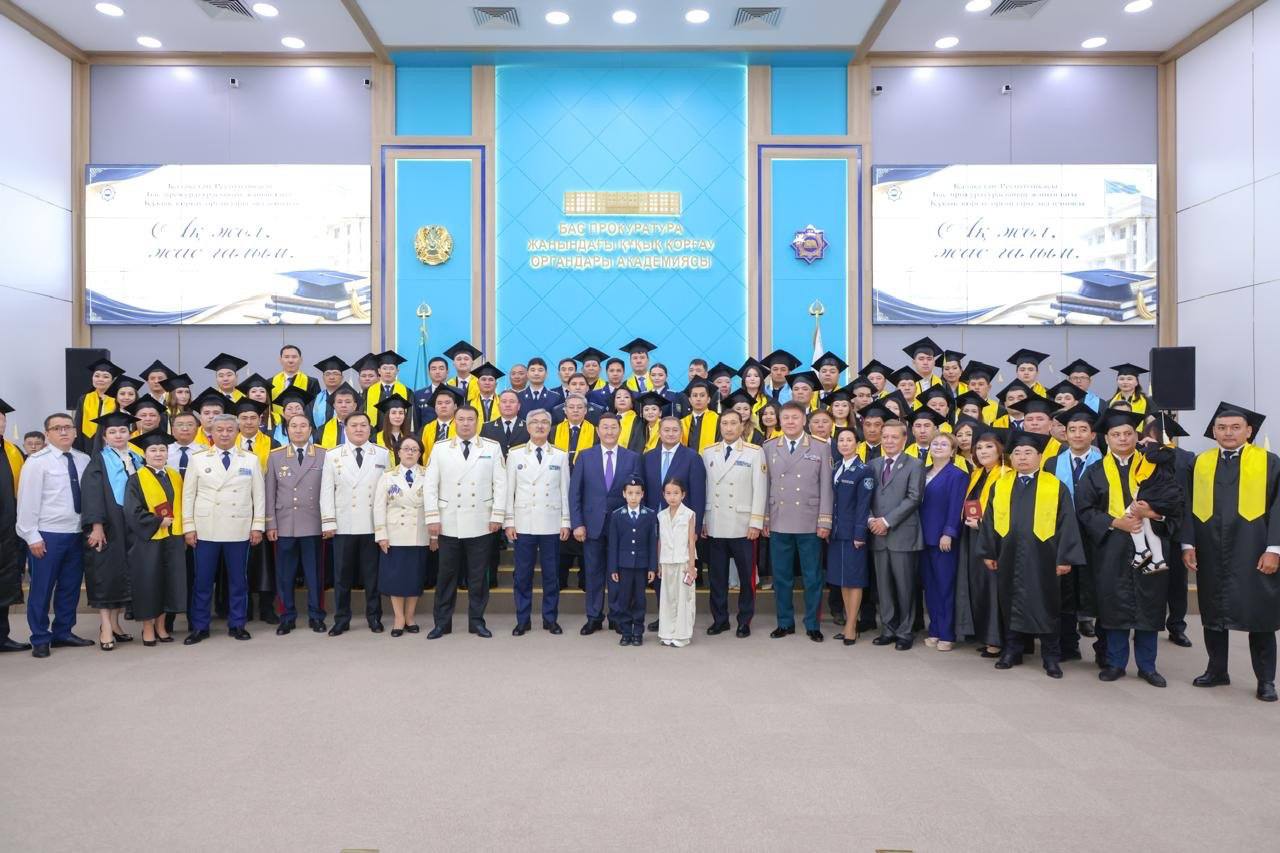

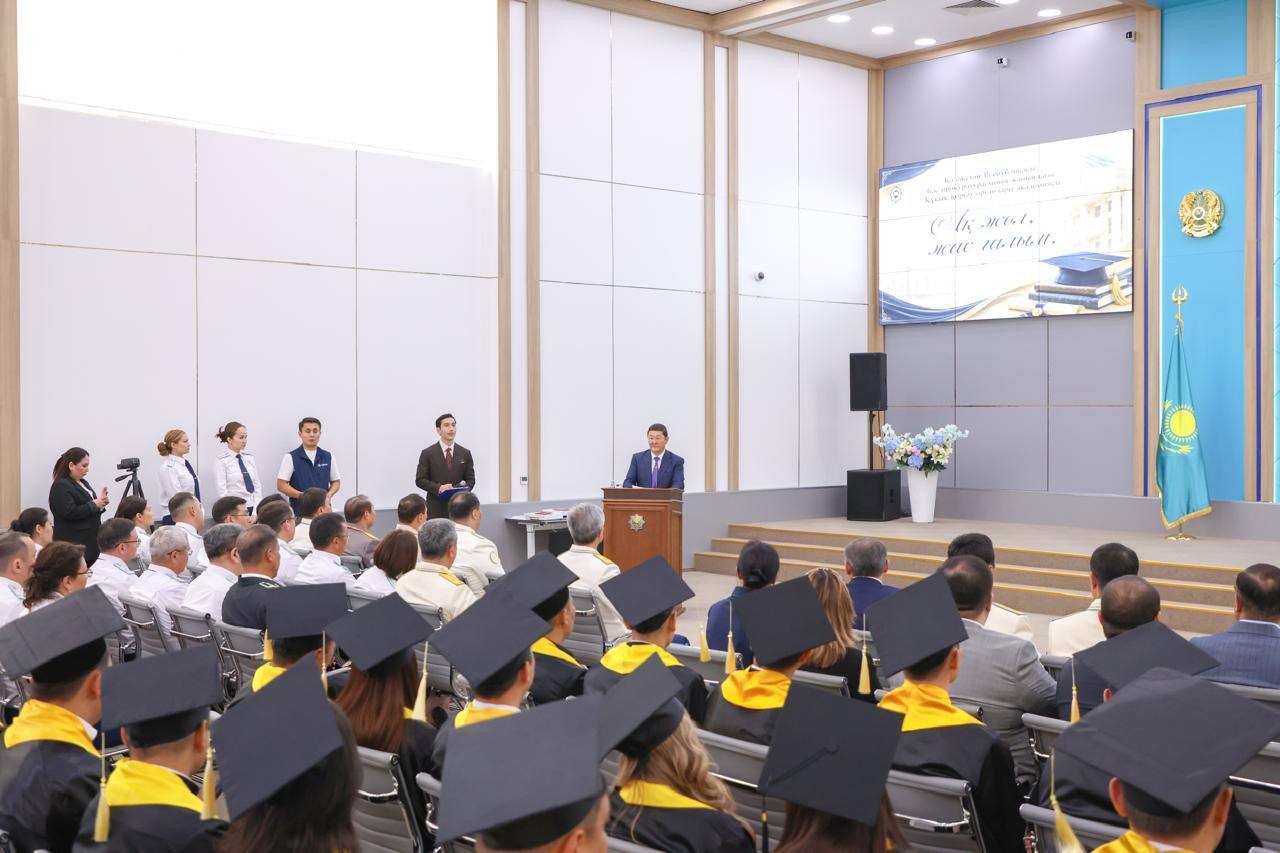
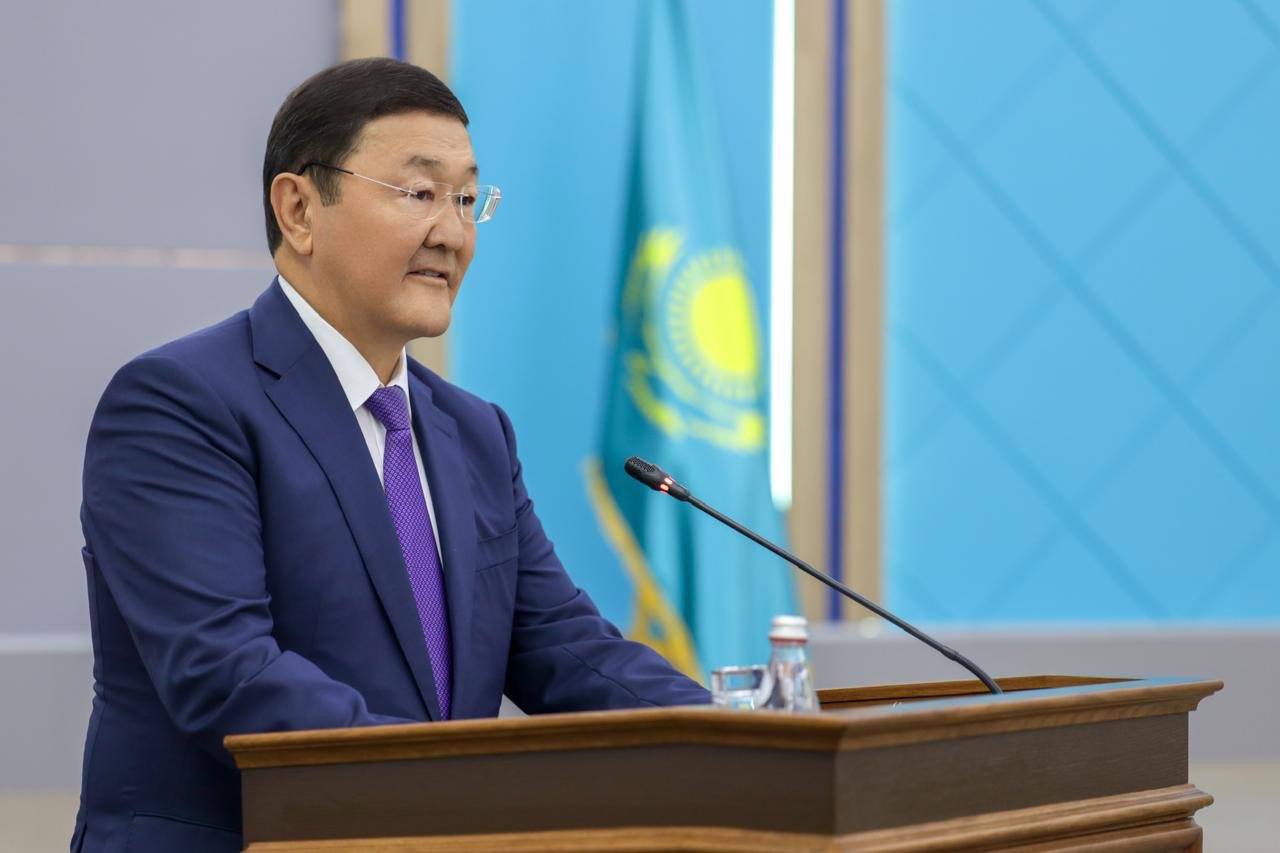


On July 16, 2026, the Prosecutor General of the Republic of Kazakhstan, Berik Asylov, participated in the graduation ceremony for the master’s and doctoral programs at the Academy of Law Enforcement Agencies under the Prosecutor General’s Office. The ceremony was attended by the Minister of Science and Higher Education, Sayasat Nurbek, as well as the heads of law enforcement and special agencies, as well as leading universities, including Maqsut Narikbayev University, Gumilev Eurasian National University, Astana International University, Astana IT University, National Defense University, and the Academy of the Ministry of Internal Affairs. Over the past 10 years, 534 law enforcement officers have received postgraduate education at the Academy, with 459 completing their master’s degrees and 75 completing their doctoral degrees.
One of the unique features of the Academy is that it brings together representatives from various agencies, fostering a shared professional culture of collaboration that unites diverse practices into a unified ecosystem of law enforcement and order.
Opening the ceremony, the Prosecutor General emphasized that this graduation marks the end of a historic period in the country’s development. The new Constitution has established a fundamentally new level of human rights protection, elevating the development of human capital, science, education, digital rights, and the values of progress, innovation, and knowledge to a constitutional level for the first time.
According to Berik Asylov, these changes will shape the future evolution of the law enforcement system. “The Academy is transforming into an intellectual and technological core of the law enforcement system, bringing together science, education, IT technologies, and practice. We are already training a new generation of specialists to work effectively in the digital environment, anticipating threats before they become widespread. In the 21st century, it is not the speed of response to crimes that matters, but the ability to anticipate them. This is why the future of the law enforcement system begins today, in the scientific laboratories, classrooms, and innovation centers of the Academy,” said Berik Asylov. The Head of the Prosecutor General’s Office emphasized that the development of digitalization aligns perfectly with the country’s new constitutional model and the strategic course of the President to build an adaptive, technologically sovereign Kazakhstan that prioritizes the unwavering service of its citizens and the rule of law.
As part of the country’s President’s instructions to improve the quality of education and research, the Academy is creating a comprehensive ecosystem for training specialists in digital forensics, cybercrime investigation, electronic evidence analysis, open information sources, and the application of artificial intelligence in law enforcement activities.
To achieve this, the Academy has established the Institute for Countering Cybercrime and Digital Technologies, which has developed unique programs in digital forensics and cybercrime investigation, including those involving the use of crypto assets.
Another strategic focus is the creation of a unified scientific space for the law enforcement system. To date, the Academy has conducted over 60 interdepartmental scientific studies.
The next step is the transformation of the Scientific and Methodological Council into an Interdepartmental Council with the participation of civilian universities.
This format will allow for the integration of scientific potential, practical experience, and modern educational approaches to develop unified solutions for the development of the country’s law enforcement system.
In the future, the Academy plans to obtain the status of a research university, expand international cooperation, and develop double-degree programs and academic mobility.
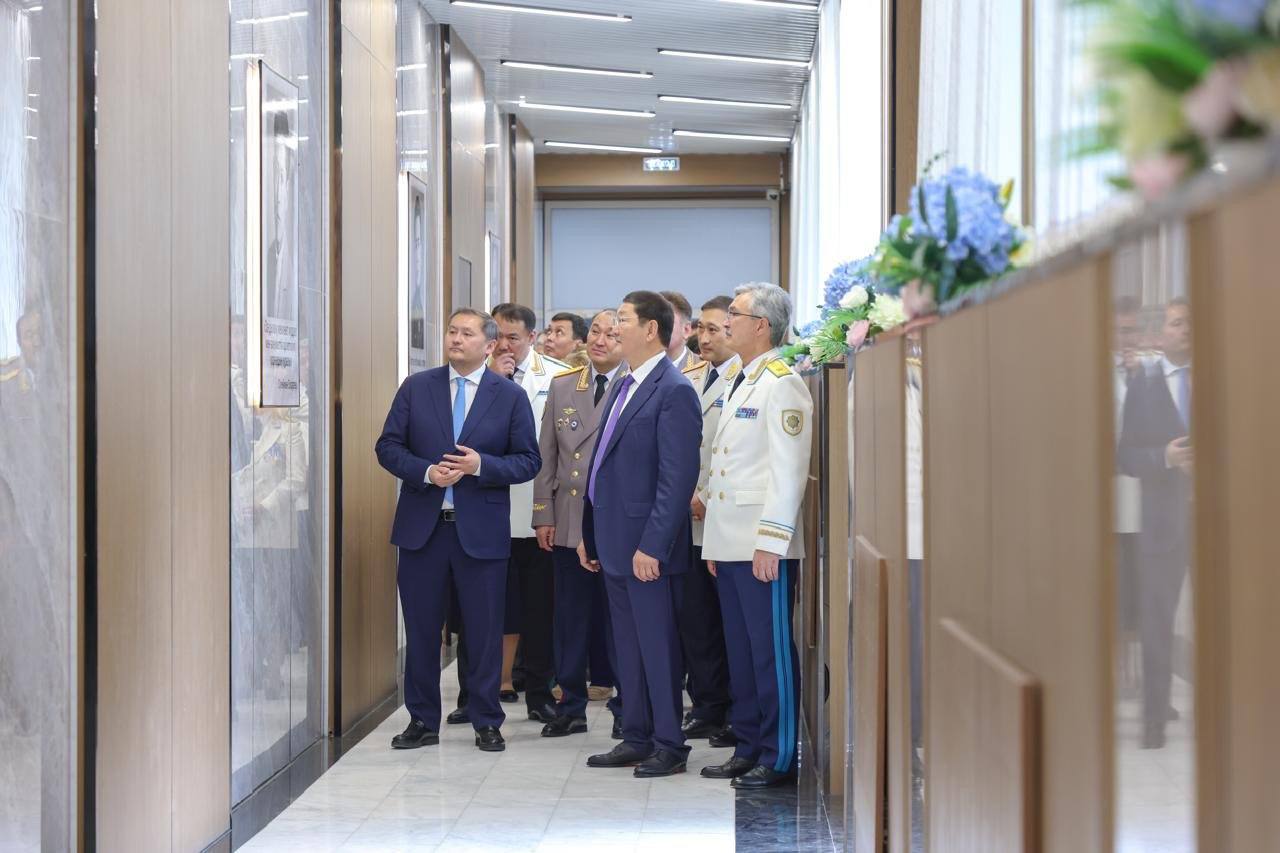
The participants of the ceremony were presented with the work of the Cyber Range, the Foresight Center, the Innovation Lab, and the Center for Scientific Prevention and Interdepartmental Cooperation.
The Foresight Center, which operates in a pilot mode, has conducted in-depth analytical studies on countering fraud using deepfake technologies, the development of unmanned systems, and shadow digital markets.
The Innovation Lab has developed 14 applied products (methodological recommendations and algorithms) that are already being implemented in practice. This experience is being scaled through the regional network of ProLab laboratories and training rooms in territorial prosecutor’s offices.
The Academy has obtained approximately 20 patents for utility models. These include prototypes of unmanned aerial vehicles, specialized technical tools for conducting investigative actions, and an unmanned underwater drone for searching and detecting metal objects, which can be used in search operations and forensic investigations.
