
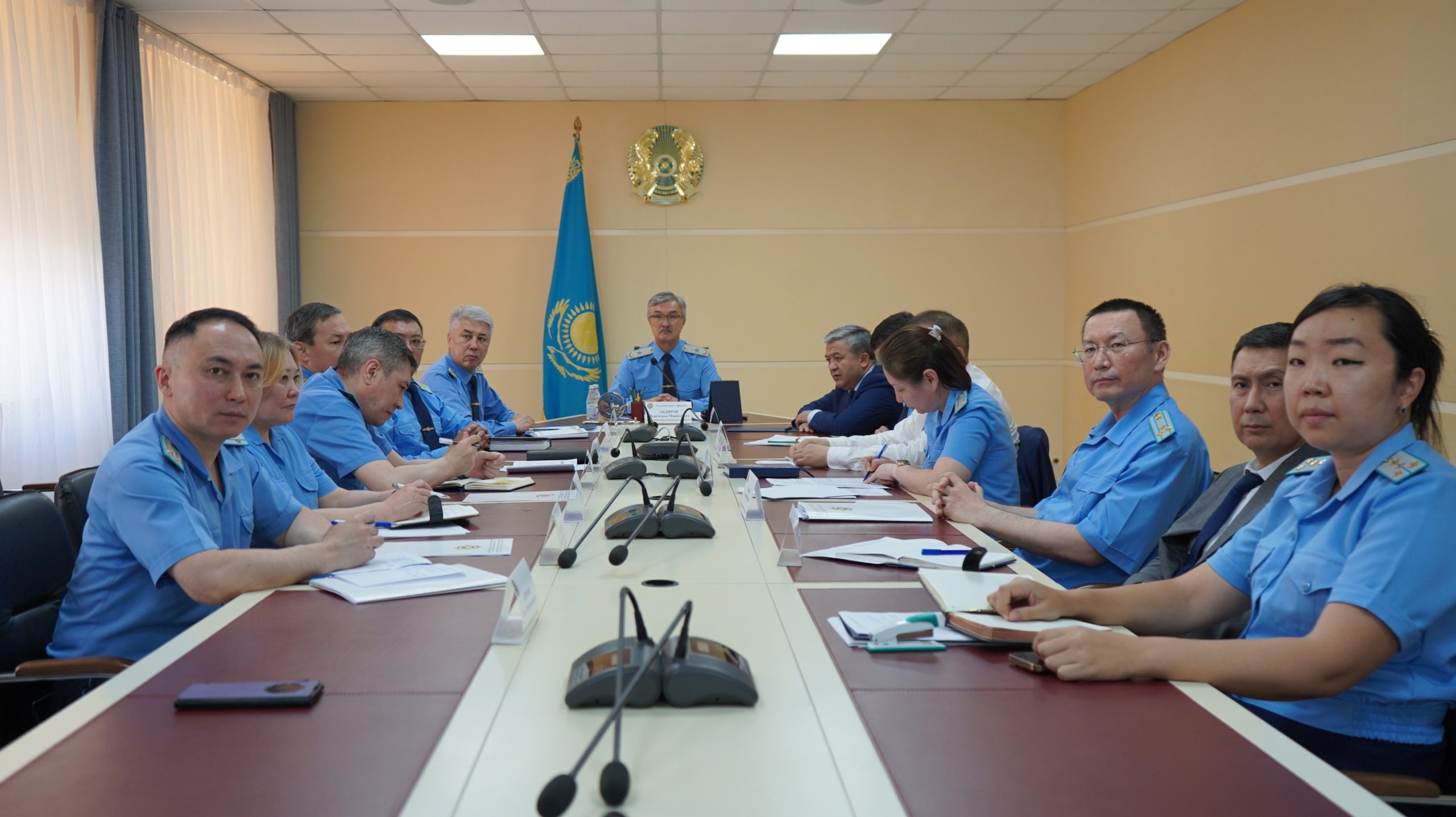
On 26 June 2026, a regular meeting of the Academic Council was held at the Academy of Law Enforcement Agencies under the General Prosecutor’s Office of the Republic of Kazakhstan.
During the meeting, the master’s and doctoral degree programmes for the 2026 intake, working syllabuses, academic calendars and entrance examination programmes were reviewed and approved.
The study programmes have been updated in line with the objectives set by the Head of State and the instructions of the Prosecutor General of the Republic of Kazakhstan. Their content is geared towards training highly qualified specialists capable of effectively upholding the rule of law and public order and countering modern challenges.
New subjects have been incorporated into the curriculum, focusing on the implementation of the “Law and Order” principle, the prevention of offences, the protection of personal data, the application of artificial intelligence technologies in law enforcement, and the development of professional communication skills among law enforcement officers.
Particular attention has been paid to the digitalisation of educational processes. This year, the Academy has fully digitised the admissions process for its master’s and doctoral programmes. For the first time, entrance examinations will be conducted using the Academy’s own digital platform, Open Academy, which will ensure the transparency of the admissions process, the objectivity of candidates’ assessment, and improve the efficiency of the examination process.
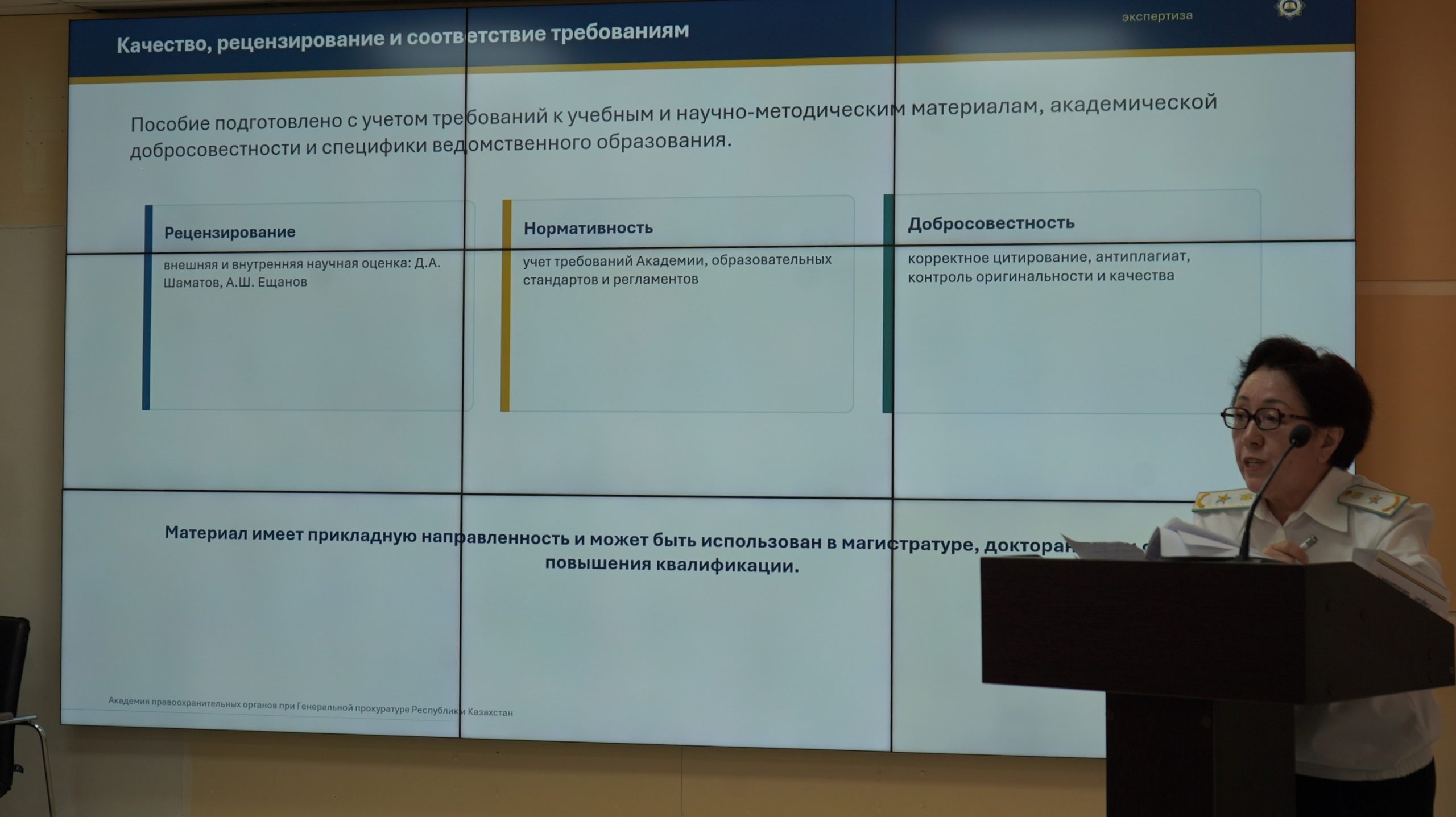
In addition, the Academic Council has recommended the publication of academic papers by the Academy’s teaching staff. Once uploaded to the Academy’s repository, these academic works will be made available to the academic community and practitioners within law enforcement agencies.
The decisions adopted at the meeting are aimed at further improving the quality of staff training, developing the Academy’s academic potential, and enhancing the departmental education system through the use of modern digital technologies.
